
Culture Fit vs. Skill Fit
There’s a quiet tension sitting in most hiring pipelines. On one side is the candidate who checks every technical box. On the other hand, the one who may not have all the credentials but who reads the room differently, communicates without friction, and seems to just get how your organization thinks. Talent acquisition teams know this tension well. And most haven’t fully decided which side they’re on.
It’s time they did.

The Problem With Defaulting to Skill Fit
Skills are measurable. They show up in resumes, pass through ATS filters, and hold up in interviews. They’re easy to defend to a hiring manager: “She had X years of experience in Y.” But here’s the reality—skills are also the easiest thing to teach. A competent person in an environment that suits them will upskill faster, retain knowledge longer, and apply it more effectively than a technically superior candidate who never quite fits in.
When TA teams over-index on skill fit, what follows is predictable. High attrition within the first year. Performance that looks good on paper but feels flat in practice. And a culture that slowly fills with people who are technically qualified but emotionally misaligned with the way the organization operates.
The Problem With Blindly Chasing Culture Fit
Culture fit, on the other hand, has a reputation problem — and for good reason. When used loosely, it becomes a hiring bias disguised as a business requirement. It ends up meaning, “We hire people who are similar to us.” That kind of thinking kills diversity, narrows perspective, and builds teams that are great at agreeing and terrible at solving.
There’s also the question of what culture is being fitted to. If the existing culture is dysfunctional, hiring for fit just scales the dysfunction. TA teams that chase culture fit without first defining what the culture actually is—and what it needs to become—are hiring backward.
The Reframe: It’s Not Either/Or
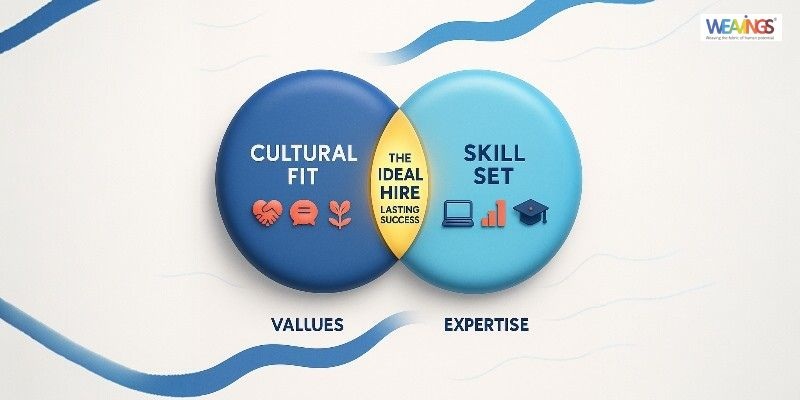
The most effective TA teams have moved past the binary. The real question isn’t culture fit or skill fit. It’s, “What’s the right weight for each at this level, for this role, at this stage of the organisation?
Entry-level and mid-level roles often benefit from skill-forward hiring — the culture can be absorbed, the values can be shaped, and the learning curve is manageable. Senior and leadership roles tip the balance the other way. At that level, a values misalignment doesn’t just affect one person. It affects every team they touch, every decision they make, and every norm they set or break.
What to Actually Do in the Room
Once the philosophy is clear, the process needs to follow. A few practices that sharper TA teams are already using:
Define the non-negotiables separately. Before the role goes live, get alignment between HR and the hiring manager on what’s a skill threshold (must-have) versus a culture signal (makes-or-breaks). These are different conversations and they should happen at different times.
Replace “culture fit” language with “culture contribution.” The better question isn’t whether someone fits the culture — it’s whether they add to it. Will this hire make the team think differently? Challenge the right assumptions? Bring a perspective the room currently lacks?
Build structured probes for values, not vibes. Culture alignment shouldn’t come down to gut feel in the final round. Design specific behavioral questions around the values that matter most to your organization—accountability, collaboration, adaptability, whatever they are — and score them consistently across candidates.
Debrief on the breakdown. After every hire, track both dimensions. Within six months, revisit: was the culture read right? Did the skills transfer into performance? Where did the model break down? That feedback loop is what separates a TA team that hires from one that learns how to hire.
The Real Competitive Advantage
Organizations that get this balance right don’t just fill roles faster. They build teams that last, perform at a higher ceiling, and contribute to a culture worth hiring into. That’s the standard talent acquisition should be holding itself to — not just closing requisitions, but building something that compounds.
The skill-versus-culture debate was never really a debate. It was a design problem. And TA teams are exactly the right people to solve it.