
The First HR Mistakes Most Startups Make
When launching a startup, founders often focus on what feels most urgent, like building products, acquiring customers, securing funding, and generating revenue.
HR usually isn’t at the top of the priority list.
In the early stages, this approach may seem reasonable. With a small team and limited resources, formal HR processes can feel unnecessary. However, some of the biggest challenges startups face later can often be traced back to HR mistakes made during their early growth phase.
The truth is that HR is not just about policies and paperwork. It is about building the people systems that support sustainable growth.
Here are some of the most common HR mistakes startups make—and how to avoid them.
1. Hiring Too Quickly
Growth creates pressure.
When workloads increase, many startups rush to hire as quickly as possible. The focus becomes filling positions rather than finding the right people.
This often leads to poor hiring decisions, mismatched expectations, and employees who don’t align with the company’s culture or goals.
Every hire has a significant impact in a startup environment. One wrong hire can affect productivity, morale, customer relationships, and team dynamics.
Instead of hiring in a rush, startups should focus on defining role requirements clearly, assessing cultural alignment, and evaluating long-term potential.
Remember: a vacant position is usually less costly than the wrong hire.
2. Hiring for Skills Alone
Many startups prioritize technical expertise while overlooking attitude, adaptability, and cultural fit.
Skills can be taught.
Mindset is much harder to change.
Startups operate in environments that are constantly evolving. Employees often need to wear multiple hats, solve unfamiliar problems, and adapt to rapid changes.
Candidates who demonstrate learning agility, resilience, and collaboration often outperform highly skilled individuals who struggle with change.
The best hiring decisions balance capability with character.
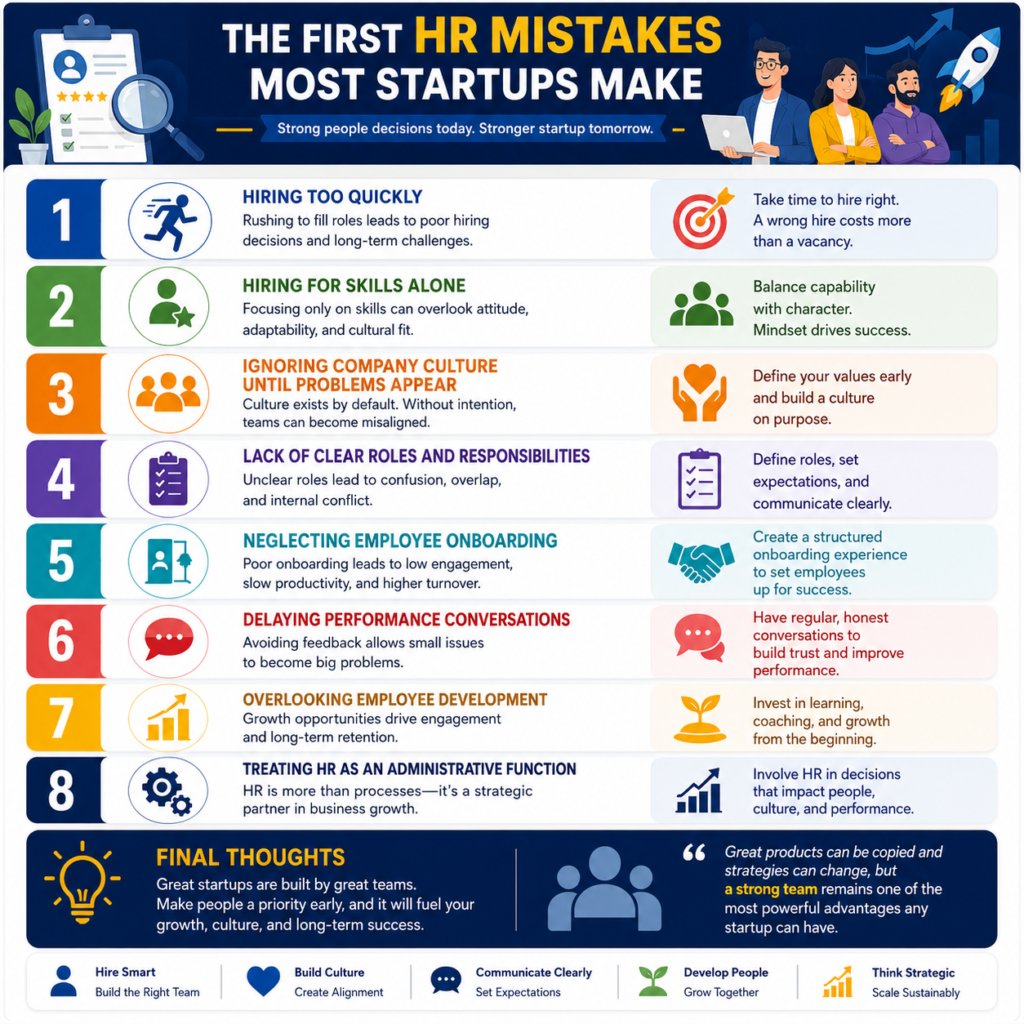
3. Ignoring Company Culture Until Problems Appear
Culture exists whether you intentionally create it or not.
One of the biggest HR mistakes startups make is assuming culture will develop naturally.
In reality, culture is shaped by everyday behaviors, leadership actions, communication styles, and decision-making practices.
Without clear values and expectations, teams can become fragmented as the company grows.
Founders should define the behaviors they want to encourage early on. Establishing cultural principles from the beginning helps create consistency and alignment as new employees join the organization.
4. Lack of Clear Roles and Responsibilities
In startups, flexibility is often necessary.
However, flexibility should not create confusion.
Employees frequently become frustrated when they are unclear about expectations, priorities, or decision-making authority.
As teams grow, overlapping responsibilities can lead to misunderstandings, duplication of effort, and internal conflict.
Clear job descriptions, defined responsibilities, and regular communication help employees understand their role in achieving company goals.
Clarity creates accountability.
5. Neglecting Employee Onboarding
Many startups assume onboarding consists of handing over a laptop and explaining a few tasks.
Effective onboarding is much more than that.
The first few weeks shape an employee’s perception of the company, leadership, and future opportunities.
Poor onboarding often results in slower productivity, reduced engagement, and higher turnover.
A structured onboarding process should introduce employees to company values, expectations, team members, tools, and business objectives.
Employees who start strong are more likely to succeed long term.
6. Delaying Performance Conversations
Startups often avoid formal feedback because they believe it creates unnecessary bureaucracy.
As a result, performance issues can remain unaddressed until they become serious problems.
Employees need regular feedback to improve, grow, and stay aligned with expectations.
Waiting until annual reviews—or worse, until a problem escalates—can damage trust and reduce performance.
Frequent, constructive conversations create a culture of continuous improvement and accountability.
7. Overlooking Employee Development
Many founders believe training and development can wait until the company becomes larger.
However, growth opportunities are one of the main reasons employees stay engaged and committed.
People want to know that their careers are progressing.
Development does not always require expensive training programs. Coaching, mentorship, challenging assignments, and learning opportunities can have a significant impact.
Investing in people early creates stronger leaders for the future.
8. Treating HR as an Administrative Function
Perhaps the biggest HR mistakes startups make is viewing HR solely as paperwork, payroll, and compliance.
Modern HR is a strategic business function.
It influences hiring quality, employee engagement, leadership development, culture, retention, and overall business performance.
The most successful startups understand that people are not just a resource—they are a competitive advantage.
When HR is included in strategic decision-making, organizations are better equipped to attract talent, retain high performers, and scale effectively.
Final Thoughts
Every startup dreams of growth.
But growth is not driven by products alone—it is driven by people.
The decisions made during the early stages of a business often determine how successfully the organization can scale in the future.
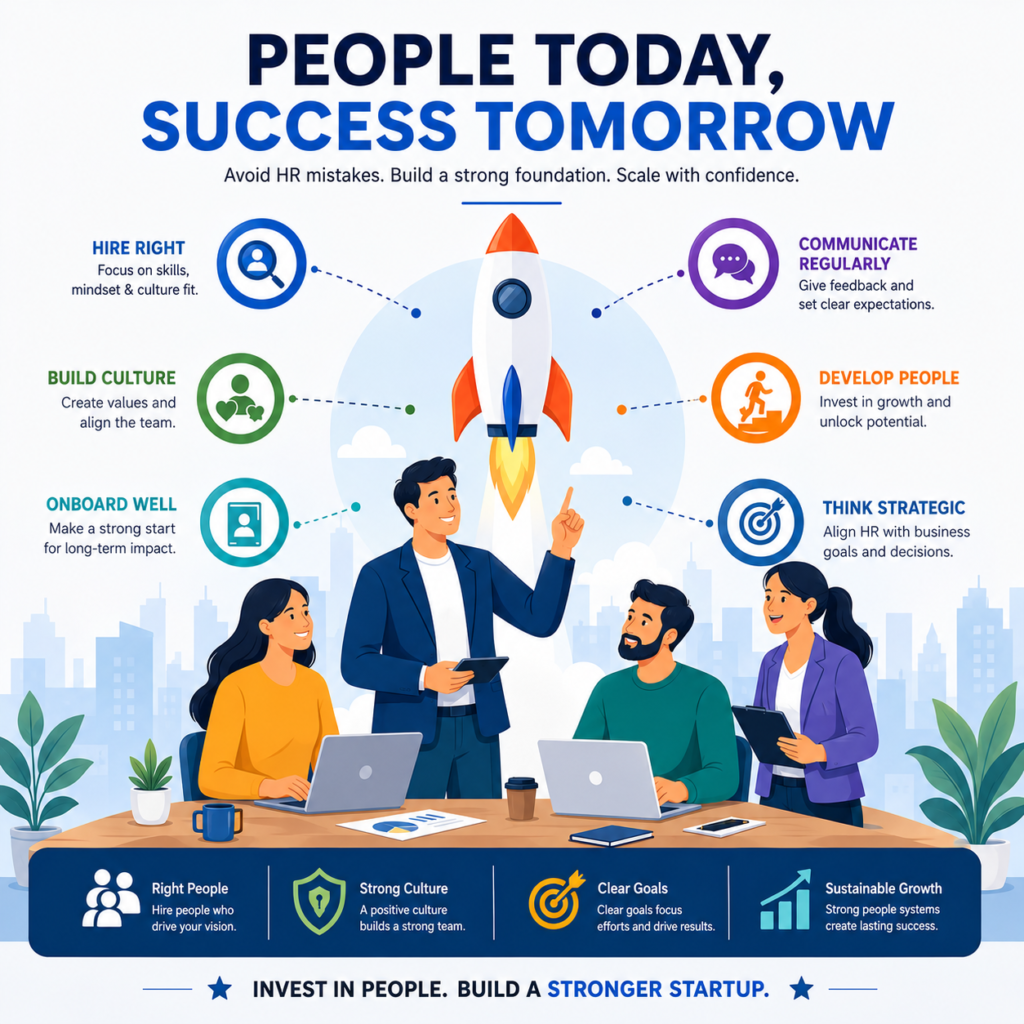
By hiring thoughtfully, building a strong culture, creating clear expectations, investing in development, and treating HR as a strategic partner, startups can avoid common HR mistakes and build a foundation for long-term success.
Because while products can be copied and strategies can change, a strong team remains one of the most powerful advantages any startup can have.